01 · PURPOSE
Growth is a means, not an end
Growth matters for what it makes possible: less poverty, better health and education, and wider life opportunities. Its value must be weighed against inequality and environmental harm.
FGROWTH BOOKS
ECONOMIC GROWTH · TECHNOLOGY · PUBLIC POLICY
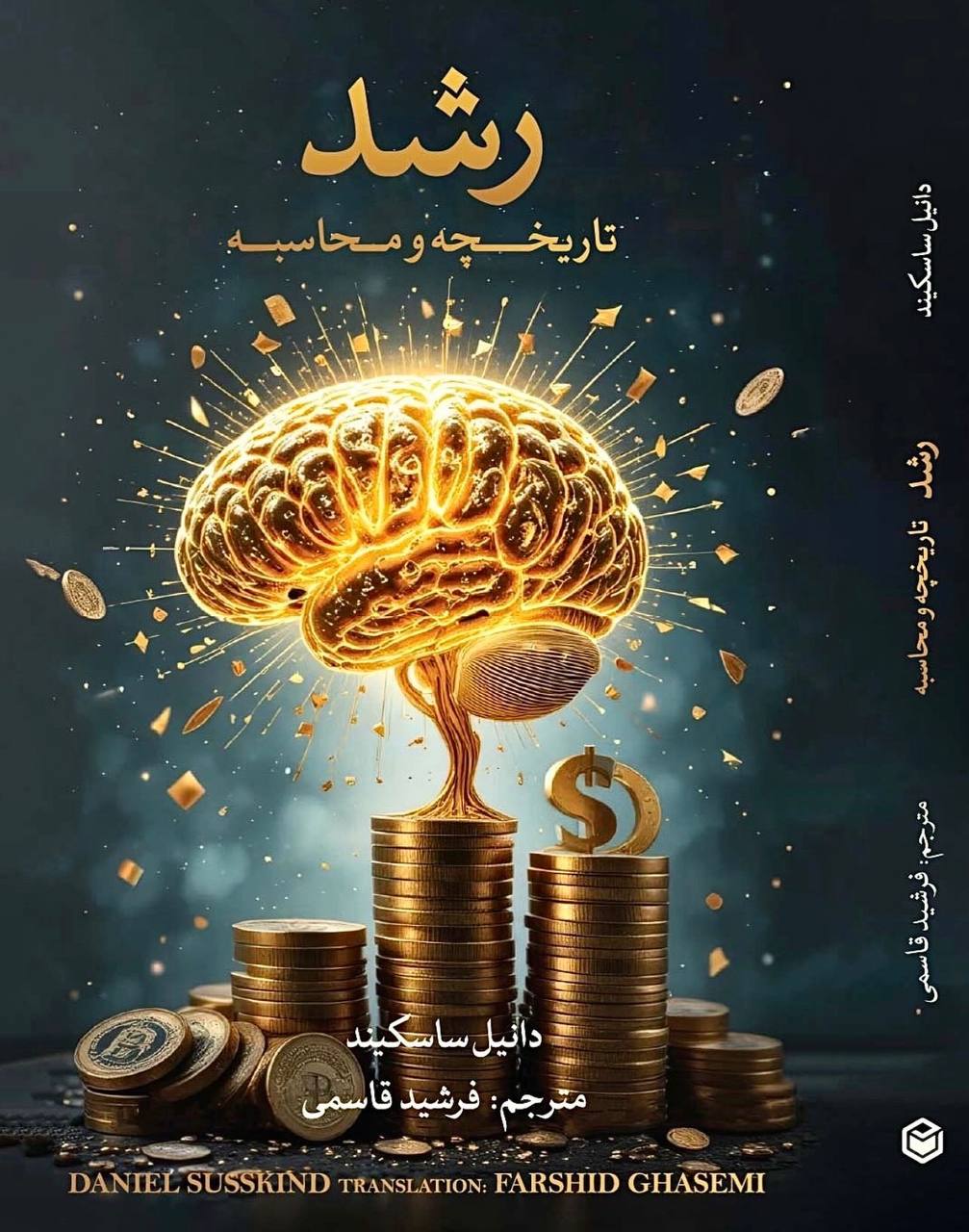
Daniel Susskind explores what growth makes possible, what it costs, and how societies can direct technological change toward human wellbeing.
AUTHOR
TRANSLATOR
EDITION
SUBJECT
AUDIENCE
CORE DEBATE
THE BOOK AT A GLANCE
Over two centuries, economic growth has reduced poverty, raised living standards and opened new possibilities. Today, climate pressure, scarce resources, structural inequality and emerging technologies make its goals and costs impossible to ignore. Daniel Susskind examines the case for growth and the case for degrowth, the prospects for green growth and decoupling, and technology’s effects on work and inequality. His central challenge is to guide growth toward human wellbeing, environmental sustainability and justice between generations.
The Persian translation by Farshid Ghasemi, a researcher in economics and executive management, is the book’s first official publication in Iran. The translation aims to preserve scientific precision while keeping the ideas useful for policy and executive decisions.
Economic growth is not only an increase in figures; it is a structural transformation that must align with a deep understanding of its drivers and the mechanisms of implementation.
THE CENTRAL QUESTION
IDEAS TO LOOK FOR
A guide to the arguments that connect prosperity, technology and the limits of progress.
01 · PURPOSE
Growth matters for what it makes possible: less poverty, better health and education, and wider life opportunities. Its value must be weighed against inequality and environmental harm.
02 · TWO VISIONS
The book examines the belief that innovation can solve shared problems alongside the warning that endless expansion cannot fit a finite planet. Susskind asks how growth can be guided intelligently.
03 · GREEN GROWTH
Can production and income rise while resource use and carbon emissions fall? Relative decoupling has occurred, while complete global decoupling remains a difficult challenge.
04 · TECHNOLOGY
Technology has driven growth, yet it can also displace jobs and deepen inequality. Public choices shape who benefits and how change is managed.
IDEAS TO EXPLORE
Four connected questions help frame the debate over what growth should achieve.
01 · PURPOSE
Assess growth through human wellbeing, opportunity, health and education—not through output figures alone.
02 · DIRECTION
Compare pro-growth and degrowth arguments, then consider how policy can direct growth toward shared goals.
03 · PLANET
Examine resource use, emissions and the limits of decoupling economic output from environmental pressure.
04 · TECHNOLOGY
Explore how technology changes work and why public policy matters for the distribution of its gains and costs.
CONNECTED RESEARCH
Related work from the articles folder adds context to the questions raised by this book.
RELATED FGROWTH BOOK
A companion perspective on economic justice, fair opportunity and the institutions that shape who benefits from growth.
RELATED FGROWTH BOOK
Explore how innovation, strategy and organizational choices can turn ideas into durable economic value.
CONTINUE EXPLORING
Explore the FGrowth book collection and follow each idea from research to application.