Ideas · Models · Growth

EN FA

Open navigation

FGROWTH BOOKS

ECONOMIC JUSTICE · PUBLIC POLICY · OPPORTUNITY

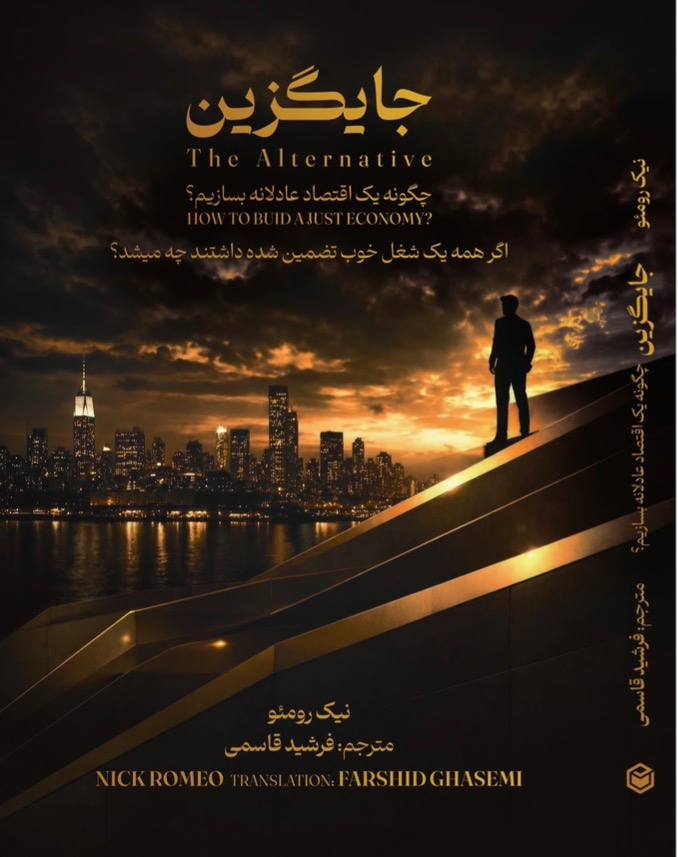
The Alternative: How to Build a Just Economy

How justice can reshape the modern economy

Nick Romeo examines how real policies and institutions can keep growth and efficiency aligned with fairer opportunity.

Book cover artwork for The Alternative: How to Build a Just Economy

AUTHOR

Nick Romeo

TRANSLATOR

Farshid Ghasemi

PUBLISHER

Motekhassesan Publishing

LENGTH

398 pages

EDITION

Persian edition

FOCUS

Economic justice and fair opportunity

THE BOOK AT A GLANCE

A just economy makes opportunity part of the design.

In The Alternative: How to Build a Just Economy, Nick Romeo asks whether an economy focused only on efficiency and growth can also be just. Drawing on real economic systems, he examines how concentrated wealth and structural inequality can push social justice to the margins—and how public policy, social institutions and alternative models can distribute opportunity more fairly.

The 398-page Persian edition was translated by Farshid Ghasemi and published in Iran by Motekhassesan. It connects global debates to local questions: unequal access to opportunity, development and welfare policy, and the effects of the digital economy. Its central message is that sustainable economies must hold growth, efficiency and justice together.
THE CENTRAL QUESTION

Can an economy be productive and fair when wealth and opportunity are so unevenly distributed?

IDEAS TO LOOK FOR

Ideas for a fairer economy

The book connects economic efficiency to the institutions and policies that make opportunity more widely shared.

01 · JUSTICE

Beyond efficiency alone

An economy can be productive and still leave people behind. The book asks how fairness can become a core measure of economic success.

02 · INEQUALITY

Wealth, power and opportunity

Concentrated wealth and structural gaps shape access to resources, mobility and meaningful economic choices.

03 · INSTITUTIONS

Policy can widen opportunity

Public policy and social institutions can help distribute opportunity fairly while sustaining a productive economy.

04 · IRAN

Connect global ideas to local choices

The questions in the book speak to development and welfare policy in Iran, equal access to resources and the effects of the digital economy.

IDEAS TO EXPLORE

Four questions for economic justice

These themes connect the book argument to practical choices in policy, institutions and development.

01 · PRINCIPLE

What makes an economy just?

Reconsider the place of fairness alongside productivity and growth in judging economic outcomes.

02 · STRUCTURE

How does inequality take hold?

Look at concentrated wealth and the structural barriers that limit access to opportunities and resources.

03 · POLICY

Which alternatives can work?

Consider real models, public policy and social institutions that can create fairer, durable outcomes.

04 · APPLICATION

What does justice mean for Iran?

Relate the debate to national development, welfare choices, digital markets and equal opportunity.

CONNECTED RESEARCH

Ideas that continue across the FGrowth library.

Related work from the articles folder adds context to the questions raised by this book.

RELATED FGROWTH BOOK

Growth: A History and a Reckoning

A complementary examination of how to direct economic growth toward human wellbeing and sustainability.

RELATED FGROWTH BOOK

Economy in the Mirror of Innovation

A practical view of innovation, economic development and the management choices that shape opportunity.

CONTINUE EXPLORING

Bring the next idea into view.

Explore the FGrowth book collection and follow each idea from research to application.